
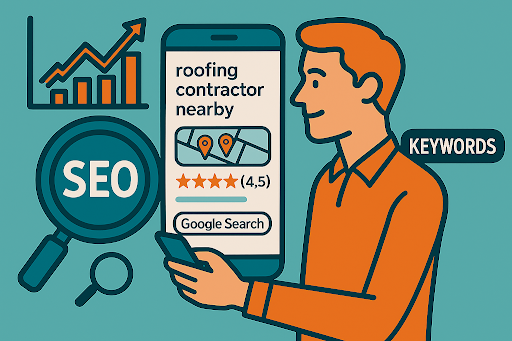
For general contractors, standing out in a competitive market requires more than just quality work and word-of-mouth referrals. Homeowners and businesses increasingly search online to find reliable contractors, making a strong digital presence essential.
The main reasons why local SEO is important for general contractors come down to visibility, trust, and capturing high-intent leads in specific geographic areas.
Local SEO ensures contractors appear where their potential clients search – on Google Maps, local directories, and search results – driving measurable business growth.
Top Reasons Why Local SEO Matters for General Contractors
Local SEO is the key to connecting general contractors with nearby clients actively seeking their services. Unlike traditional SEO, which casts a wide net, local SEO focuses on optimizing a business’s online presence to rank higher in location-specific searches.
For contractors, local SEO means appearing in the Google Local Pack, the top three businesses shown on Google Maps, or in organic results for queries like “general contractor near me” or “kitchen remodel in [city].”
The importance of local SEO lies in consumer behavior. Over 80% of people use Google to find local services, with 50% of mobile searches leading to a visit or call within 24 hours, according to Google’s own data. For general contractors, this translates to a steady stream of high-intent leads.
To capitalize on this, key tactics include:
- Optimizing the website with local keywords, like “Dallas general contractor.”
- Maintaining a robust Google Business Profile with photos and reviews.
- Ensuring consistent Name, Address, and Phone Number (NAP) data across directories.
- Creating location-specific content to signal relevance to search engines.
Without local SEO, even the most skilled contractors risk being invisible to these high-intent clients, losing opportunities to competitors who prioritize their online presence.
How Homeowners and Clients Search for Contractors
Homeowners typically begin their search for contractors on Google, often using mobile devices while researching from home or work. Queries like “best general contractor in [city]” or “roofing contractor nearby” dominate, with Google’s Local Pack and organic results shaping their decisions.
According to BrightLocal, 98% of consumers read online reviews for local businesses, and 46% trust reviews as much as personal recommendations. This means a contractor’s online reputation, visibility in Maps, and website quality directly influence whether they get the call.
For example, a homeowner in need of a deck builder might search “deck contractor in Charlotte.” If a contractor’s GBP is optimized with recent photos, detailed service descriptions, and positive reviews, they’re more likely to appear in the Local Pack.
This prominent placement grabs attention and drives clicks, as homeowners see the contractor as a trusted option.
Clicking through to a professional, locally optimized website seals the deal, as it reassures the client of credibility and expertise. Without local SEO, contractors miss these critical touchpoints.
The Power of Google Business Profile, Reviews, and NAP Consistency
For contractors, leveraging Google Business Profile, reviews, and NAP consistency is the foundation of a powerful local SEO strategy that drives leads.

Optimizing Google Business Profile for Maximum Impact
A robust Google Business Profile (GBP) serves as the cornerstone of local SEO for contractors. It often acts as the first impression potential clients encounter, appearing prominently in Google Maps and search results.
A complete GBP builds trust and drives clicks by showcasing:
- High-quality photos of past projects, like a stunning kitchen remodel.
- Accurate service areas to target the right local audience.
- Up-to-date contact information for easy client outreach.
For instance, a contractor displaying before-and-after photos of a recently completed kitchen remodel can capture attention over competitors with sparse profiles, making the GBP a powerful tool for standing out.
Leveraging Reviews to Build Trust and Rankings
Reviews play a critical role in local SEO success. According to BrightLocal, businesses with 4+ star ratings rank higher in local searches. Encouraging satisfied clients to leave detailed reviews about specific projects, such as “They transformed our outdated bathroom in just two weeks!” adds authenticity and boosts visibility.
Key strategies include:
- Prompting happy clients to share specific, project-focused feedback.
- Responding to all reviews, positive or negative, to show professionalism.
- Highlighting glowing reviews on the website to reinforce credibility.
Responding thoughtfully to reviews demonstrates a contractor’s commitment to client satisfaction, further enhancing trust and search rankings.
Ensuring NAP Consistency for Seamless Visibility
NAP consistency, ensuring the business’s Name, Address, and Phone Number match across all platforms, prevents confusion for both customers and search engines. Inconsistent NAP data, such as a different address on Yelp versus the website, can harm rankings.
Contractors can maintain consistency by:
- Using tools like Moz Local or BrightLocal to audit listings.
- Regularly updating directories like Yelp, Angi, and Houzz.
- Verifying NAP details on the website and GBP match exactly.
Consistent NAP data strengthens a contractor’s online presence, ensuring search engines and clients can easily find and trust the business.
Local SEO vs. Paid Ads: Why Visibility Matters
Understanding the strengths and limitations of local SEO and paid ads is crucial for general contractors aiming to maximize their online visibility and attract local clients.

Benefits and Drawbacks of Local SEO
Local SEO offers sustainable, cost-effective visibility for general contractors, delivering long-term results without ongoing costs.
By optimizing a Google Business Profile (GBP) and website, contractors can appear in the Local Pack or organic results, building trust as clients view these rankings as earned rather than purchased.
Benefits include:
- Consistent lead generation over time.
- Enhanced credibility through organic rankings.
- No recurring costs once optimized.
However, local SEO requires time and effort to see results, which can be a drawback for contractors needing immediate leads. Regular updates to GBP, reviews, and content are necessary to maintain rankings.
Benefits and Drawbacks of Paid Ads
Paid ads, like Google Ads, drive quick traffic, making them ideal for contractors seeking immediate visibility. They allow precise targeting of local audiences searching for services like “roof repair near me.”
Key advantages include:
- Instant visibility in search results.
- Flexible budget control for campaigns.
- Targeted ads for specific services or areas.
The downside is that leads stop the moment the budget runs out, and costs can add up quickly. Clients may also trust paid ads less, as they’re perceived as bought placements rather than earned credibility.
Busting Myths About Local SEO for Contractors
Many contractors hesitate to invest in local SEO, often due to misconceptions. A common myth is that word-of-mouth referrals are enough. While referrals are valuable, they don’t reach the 80% of homeowners who start their search online.
Another misconception is that SEO is too complex or expensive. In reality, basic tactics like optimizing a GBP, maintaining NAP consistency, and creating local content are accessible and cost-effective, especially with the help of a digital marketing agency.
Some contractors believe a basic website is sufficient. However, a site lacking local keywords, mobile optimization, or clear calls-to-action will struggle to rank.
Finally, there’s the myth that SEO takes too long to deliver results. While it’s not an overnight fix, consistent efforts, like regular GBP updates and review management, can yield leads within weeks, especially in less competitive markets.
💡Expert Tip: Ranking for Adjacent Neighborhoods
To expand reach without a physical location in every area, contractors can optimize for adjacent neighborhoods or cities. For example, a contractor based in Plano, Texas, can target “Frisco general contractor” by creating location-specific landing pages (e.g., “Home Remodeling in Frisco”) and mentioning these areas in their GBP service regions.
Including nearby landmarks or neighborhoods in website content, like “serving homeowners near Legacy West,” signals relevance to search engines. This tactic broadens visibility while staying authentic to the contractor’s service area.
Take Control of Your Online Presence
Local SEO is non-negotiable for general contractors aiming to thrive in a digital-first world. By optimizing Google Business Profile, maintaining consistent NAP data, and crafting a locally relevant website, contractors can dominate search results and attract high-intent clients.
The data is clear: local searches drive real leads, and businesses that prioritize SEO outperform those relying solely on traditional methods.
To stay competitive, start by auditing the current online presence, claiming or updating the GBP, and investing in professional SEO strategies.