
Running a store online is one thing, but making it visible to the right audience is a whole different game.
For print-on-demand businesses, visibility doesn’t just depend on creative designs or catchy slogans; it depends on being discoverable. That’s why many store owners ask what the best keywords for POD websites are.
Choosing the right terms is the foundation of SEO success, and in a crowded market, it can be the edge that sets your store apart.
The Best Keywords for Print On Demand Websites per Category
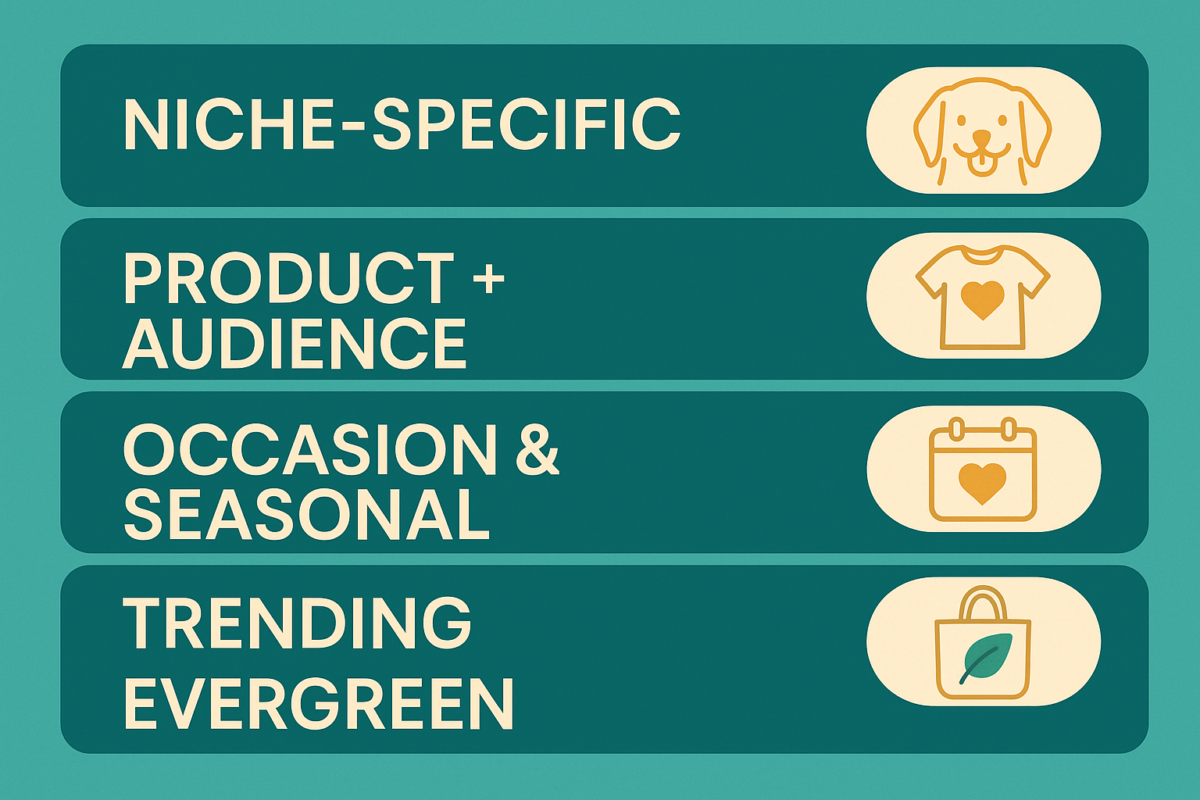
When it comes to POD SEO, not all keywords are created equal. The ones that bring in sales are usually specific, intent-driven, and closely tied to what buyers are already searching for. You don’t want to just show up for any search; you want to show up for the right searches.
Below are the main types of keywords you should focus on to get found and convert browsers into paying customers.
Niche-Specific Keywords
Targeting a niche makes it much easier to stand out from the thousands of other POD stores. Broad terms like “t-shirt” or “mug” might get a ton of searches, but you’ll be buried under bigger brands.
Instead, niche keywords help you connect with passionate buyers who know what they want.
Examples include:
- “funny dog mom t-shirts”
- “vegan tote bags”
- “minimalist art phone cases”
- “anime-inspired hoodies”
- “yoga-themed mugs”
- “retro 90s graphic tees”
- “plant lover sweatshirts”
The beauty of niche keywords is that they allow you to target communities that have built-in loyalty. Dog lovers, anime fans, and fitness enthusiasts will happily spend money on items that reflect their identity.
By carving out a specific niche, you reduce competition and attract customers who are far more likely to convert.
Product + Audience Keywords
Another powerful strategy is combining your product with your audience. Instead of just describing what the item is, think about who it’s for. This makes your keywords resonate with your ideal customer and improves your chances of ranking.
Examples include:
- “gamer hoodies”
- “teacher appreciation mugs”
- “fitness tank tops for women”
- “nurse water bottles”
- “dad hats for golfers”
- “music festival crop tops”
- “matching family pajama sets”
This type of keyword instantly communicates both the product and the intended buyer. Someone searching for “teacher appreciation mug” isn’t just browsing; they’re almost certainly shopping for a gift. That intent makes these keywords extremely valuable.
Occasion & Seasonal Keywords
A huge chunk of POD sales comes from gifts, so occasion-based and seasonal keywords are absolute gold.
People are always searching for something special to mark birthdays, holidays, and other big events. By optimizing for these, you tap into predictable, recurring sales cycles.
Examples include:
- “Valentine’s Day couple shirts”
- “Christmas matching pajamas”
- “Mother’s Day wine glass”
- “Father’s Day grilling apron”
- “Halloween spooky mugs”
- “Graduation class of 2025 hoodie”
- “Wedding party tote bags”
- “Birthday milestone shirts (e.g., 30th birthday tee)”
These keywords tend to spike in popularity at certain times of the year, so planning is crucial. For example, if you want to sell for Christmas, you should already be optimizing and listing products by October or November.
Trending Keywords
Trends come and go, but if you can catch them while they’re hot, you can score a surge of traffic and sales.
Unlike evergreen terms, trending keywords are time-sensitive, so they require you to stay plugged into what’s happening online. Keep an eye on TikTok, Instagram hashtags, and Google Trends for emerging styles, memes, or aesthetics.
Examples include:
- “cottagecore aesthetic posters”
- “e-girl graphic tees”
- “coquette bow tote bags”
- “Y2K style hoodies”
- “mushroom art prints”
- “AI art t-shirts”
- “retro vaporwave phone cases”
The trick with trending keywords is speed; if you can design and launch quickly, you can ride the wave before it fades. Even better, sometimes trends evolve into long-term niches (like “vintage aesthetic” or “minimalist design”), giving you lasting traffic.
Evergreen Keywords
While trends and seasonal terms are great for spikes, evergreen keywords are your bread and butter. These are the reliable, always-in-demand phrases that people search for year-round. They may be more competitive, but they give you a solid foundation of steady traffic.
Examples include:
- “custom coffee mugs”
- “personalized tote bags”
- “funny graphic tees”
- “custom phone cases”
- “photo collage pillows”
- “motivational posters”
- “personalized baby onesies”
- “engraved water bottles”
These keywords work because they focus on customization, humor, and practicality, things that will never go out of style. If you build your POD catalog with these in mind, you’ll have consistent sales while layering on seasonal and trending keywords for extra growth.
How to Find the Right Keywords for Your POD Store
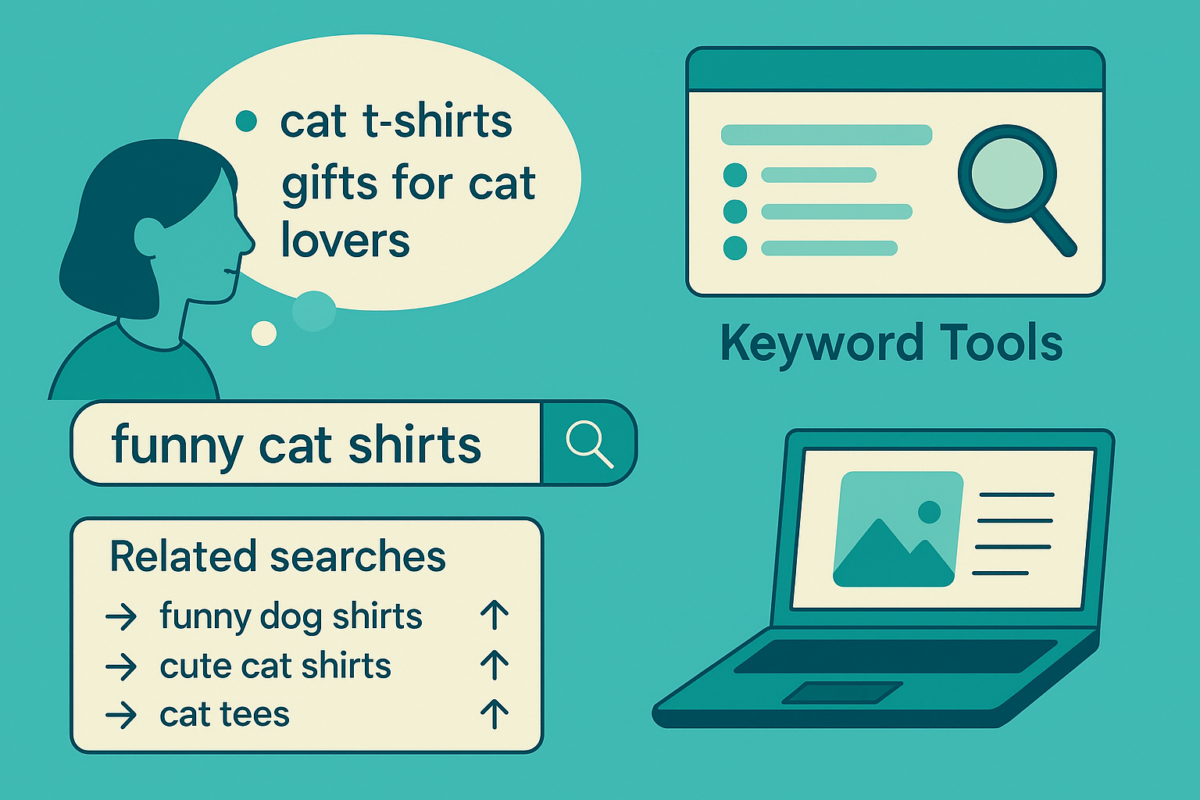
Knowing keyword types is only half the battle; you also need a process to uncover them. Keyword research is about understanding how your customers search and matching that with your products.
Here’s a streamlined approach to keep your list fresh and relevant.
1. Brainstorm Customer Topics
Think like your buyer. What would they type into Google or Etsy to find your product? For example, cat lovers might search “funny cat shirts” or “cat shirts for women.” Make a quick list of product names, niche phrases, and variations as your starting point.
2. Check Related Searches
Plug your ideas into search engines and see what autocomplete suggests. Typing “cat shirts” could reveal “funny cat shirts” or “cat shirts for men.” Scroll to the bottom of Google for “related searches” to find even more ideas you might have missed.
3. Use Keyword Tools
Validate your ideas with keyword tools that show search volume and competition. These tools take the guesswork out of keyword research and help you focus on terms that drive traffic.
- Google Keyword Planner (free, reliable data)
- Google Search Console (complete results with impressions, clicks, and more)
- Ubersuggest (beginner-friendly, with extra suggestions)
- Ahrefs/SEMrush (paid, competitor insights)
- Etsy search bar or Marmalead (great for Etsy sellers)
4. Analyze Competitors
Look at product titles, tags, and descriptions of successful POD stores. If many rank for “matching family Christmas pajamas,” that’s a sign it’s worth targeting. Don’t copy, just spot gaps and opportunities.
5. Adapt for Platforms
Tailoring your keywords to the marketplace you’re selling on ensures your products rank higher and reach the right audience. Each platform favors different SEO signals:
- Etsy: Titles + tags matter most.
- Shopify/WooCommerce: Use product titles, meta descriptions, and blog posts for Google rankings.
- Redbubble/Teespring: Tagging and trend-driven keywords work best.
Mistakes to Avoid With POD Keywords: What Most Sellers Get Wrong
Even with the right tools, many POD sellers make keyword mistakes that hurt visibility. Avoiding these pitfalls can save you time, frustration, and lost sales.
- Being Too Broad: Keywords like “t-shirt” or “mug” are way too competitive. Narrow them down to be more niche and buyer-focused.
- Keyword Stuffing: Don’t overload your product pages with the same phrase. It looks spammy, hurts readability, and lowers your chance of ranking.
- Ignoring Buyer Intent: Not all keywords bring buyers. For example, “DIY print on demand” attracts entrepreneurs, not customers. Focus on the terms actual shoppers use.
Use the Right Keywords to Grow Your POD Business
Finding the best keywords for your print-on-demand website isn’t about guessing; it’s about strategy. When you think like your buyers and research what they’re typing into search bars, you uncover the phrases that drive sales.
Balancing evergreen, niche, and seasonal keywords ensures your store attracts traffic all year round while staying flexible enough to catch trends.
The next step is applying those keywords consistently in your product titles, descriptions, and tags. Done right, this makes your store easier to find and more appealing to shoppers.
And if you’d like expert guidance on scaling your POD business, Market Me Good can help you turn SEO insights into growth.