
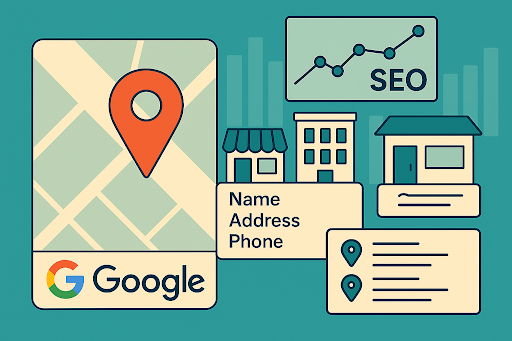
Google Maps citations play a critical role in boosting a business’s visibility in local search results.
These citations, mentions of a business’s name, address, and phone number (NAP) across online platforms, help search engines like Google verify a business’s legitimacy and relevance.
For local SEO, citations act as digital trust signals, influencing rankings in Google Maps and the local “Map Pack.” A well-executed citation strategy can drive more foot traffic, increase online discoverability, and strengthen a business’s local presence.
This guide explains the ins and outs of using Google Maps citations for local SEO, offering actionable steps and insights to maximize their impact.
Leveraging Google Maps Citations for Local SEO Success: Your 4-Step Guide
Building and managing citations requires a strategic approach to ensure they contribute effectively to local rankings. The following steps outline a proven process for leveraging citations to enhance a business’s visibility in Google Maps and local search results.

Step 1 – Ensure NAP Consistency Across the Web
NAP stands for Name, Address, and Phone number, the core details that define a business’s identity online. Consistency in NAP across all platforms is essential for building trust with search engines. Google uses NAP data to confirm a business’s legitimacy and location..
To achieve NAP consistency, start by auditing existing listings. Ensure the business name is identical everywhere, avoiding variations like “Joe’s Pizza” on one site and “Joe’s Pizzeria” on another.
Standardize the address format, including street abbreviations and suite numbers, and use the same phone number (local preferred) across all platforms.
Consistency signals reliability, which directly impacts how Google ranks a business in local search results.
Step 2 – Submit Your Business to Core Directories
The foundation of any citation strategy begins with submitting a business to high-authority directories. The most critical platform is the Google Business Profile (GBP), as it directly influences Google Maps rankings.
A fully optimized GBP with accurate NAP, business hours, categories, and photos is non-negotiable for local SEO success. Claiming and verifying a GBP listing ensures the business appears in Google Maps and the local Map Pack.
Beyond Google, expand to other core directories like Yelp, Bing Places, Apple Maps, and Facebook. These platforms are widely trusted by search engines and consumers alike. When submitting to these directories, double-check NAP details and add relevant information like website URLs and business descriptions.
Step 3 – Use Local and Niche-Specific Directories
While core directories are essential, local and niche-specific directories add targeted relevance. Local directories, such as those run by a city’s Chamber of Commerce or regional business associations, tie a business directly to its community.
These citations reinforce geographic relevance, a key factor in local SEO rankings.
Niche-specific directories cater to specific industries, such as Avvo for lawyers or Healthgrades for medical professionals. These platforms provide contextually relevant citations that signal expertise in a particular field.
When selecting directories, prioritize those with high domain authority and genuine user engagement to maximize SEO benefits.
Step 4 – Monitor and Maintain Your Citations
Citation building is not a one-time task. Business details like addresses, phone numbers, or even names can change, and outdated citations can harm rankings. Regular monitoring ensures NAP consistency and prevents duplicate or incorrect listings from diluting SEO efforts.
Tools like BrightLocal and Whitespark simplify citation tracking by identifying inconsistencies, duplicates, and opportunities for new citations. These platforms provide detailed reports and streamline updates across multiple directories.
For businesses that relocate or rebrand, promptly updating citations is critical to maintaining trust with search engines. Routine audits, quarterly or biannually, keep citations accurate and effective.
What Makes a Citation “Effective” for SEO?
Not all citations carry the same weight. Understanding what makes a citation effective helps businesses prioritize efforts and avoid wasted time on low-value platforms.
Structured vs. Unstructured Citations

Citations fall into two categories: structured and unstructured. The differences between these types are critical for understanding their SEO impact:
- Structured Citations: Appear in standardized formats on directories like Yelp or Yellow Pages, where businesses submit NAP details in specific fields. These are highly valuable because search engines can easily parse and verify the data.
- Unstructured Citations: Mentions of a business’s NAP in less formal contexts, such as blog posts, news articles, or social media. For example, a local newspaper mentioning a business’s address in an event recap is an unstructured citation. While less controlled, these citations contribute to visibility by reinforcing a business’s presence across diverse platforms.
Both types support local SEO, but structured citations typically have a stronger direct impact on rankings.
Why Authority and Relevance Matter
The effectiveness of a citation depends on the authority and relevance of the platform hosting it.
High-authority directories like Google Business Profile or Yelp carry more weight because search engines trust their data. Domain authority, a metric reflecting a site’s credibility, influences how much a citation impacts rankings.
Relevance is equally critical. A citation on a local Chamber of Commerce website is more valuable for a business targeting that area than a generic, low-quality directory.
Industry-specific directories also enhance relevance by connecting a business to its niche. Prioritizing authoritative and relevant platforms ensures citations deliver maximum SEO value.
Common Citation Mistakes That Hurt Local Rankings
Poor citation management can undermine local SEO efforts. Several common mistakes can damage rankings and reduce visibility:
- Inconsistent NAP Across Listings: Even minor discrepancies, like abbreviating “Street” as “St.” on one platform but not others, can confuse search engines and lower trust.
- Submitting to Spammy or Irrelevant Directories: Low-quality directories with little user engagement or questionable credibility can harm a business’s reputation with Google.
- Creating Duplicate Listings: Intentionally or accidentally, duplicates can dilute SEO signals and lead to ranking penalties.
- Ignoring Outdated Business Details: Old addresses or phone numbers risk misleading customers and search engines alike.
Regular audits and careful submission practices prevent these issues from derailing local SEO performance.
💡Pro Tip – Use Citation Management Tools to Streamline Efforts
Manually managing citations across dozens of platforms is time-consuming and error-prone. Citation management tools like Semrush Local, Yext, or BrightLocal automate the process, saving time and improving accuracy.
These tools identify existing citations, flag inconsistencies, and uncover opportunities for new listings. They also help detect and resolve duplicate listings, which can otherwise harm rankings.
For businesses with limited resources, these tools provide a cost-effective way to maintain a robust citation profile. By streamlining submission and monitoring, they allow businesses to focus on other aspects of local SEO, such as content creation strategy or link building.
Build Stronger Local SEO with Smart Citations
Google Maps citations build trust with search engines, enhance discoverability, and drive more customers to physical locations. By ensuring NAP consistency, submitting to high-authority and relevant directories, and regularly monitoring listings, businesses can significantly boost their visibility in local search results.
Regular citation audits and updates are essential to maintain accuracy and relevance. Businesses that invest in a smart citation strategy will see long-term benefits, including higher rankings in Google Maps and the local Map Pack.
For those seeking to elevate their local SEO efforts, partnering with a professional SEO service can provide the expertise needed to maximize citation impact and achieve lasting results.