
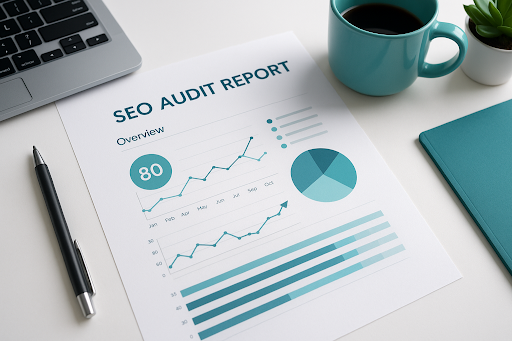
An SEO audit report is more than just a technical document—it’s your website’s health. With over 90% of online experiences starting with a search engine, having a well-optimised site is no longer optional—it’s essential.
This comprehensive report outlines your website’s strengths, uncovers weaknesses, and offers actionable steps to boost your visibility, improve user experience, and enhance overall performance.
By the end, you’ll see what an SEO audit report looks like and understand why it isn’t just a technical checklist—it’s a strategic tool that can help you outrank competitors and stay ahead in the ever-evolving digital landscape.
Key Sections of an SEO Audit Report You Need to Know

An SEO audit report can vary based on the depth of the audit and the tools used to generate it. However, the core elements are usually consistent. Below are the key sections to look out for:
1. Technical SEO Analysis
Technical SEO ensures that search engines can crawl, index, and rank a website’s content. A technical SEO audit typically includes the following elements:
Site Crawlability
- Crawl Errors: The audit will identify any issues preventing search engines from crawling your website properly, such as broken links, 404 errors, and redirect loops.
- XML Sitemap: Ensures the website’s sitemap is submitted and includes all essential pages for search engines to index.
Mobile Friendliness
With mobile-first indexing becoming more prominent, ensuring that a website is mobile-friendly is crucial. The audit will assess whether the site is responsive across different devices and browsers.
Page Speed
Page load time significantly impacts SEO and user experience. A slow site can hurt your rankings. This section of the audit will provide insights into load times and suggest improvements.
HTTPS Status
Websites with HTTPS encryption are favored by search engines and provide a more secure experience for users. The audit will confirm if your website is using HTTPS.
Structured Data
Structured data helps search engines understand your content better and display rich snippets in SERPs. The audit will analyze the implementation of schema markup.
2. On-Page SEO
On-page SEO refers to the elements on your website that can be optimized for better search engine performance. This includes content, HTML elements, and user experience factors. A typical on-page SEO audit covers:
Title Tags and Meta Descriptions
Each page should have a unique title tag and meta description that include relevant keywords. These are essential for both search engine ranking and encouraging clicks from search results.
Heading Tags (H1-H6)
Heading tags help organize content and signal to search engines the importance of different sections. A good audit will identify if the headings are structured logically and appropriately.
Content Quality
Quality content that is valuable, informative, and engaging is vital for SEO success. The audit will check if the content is original, provides value to users, and is optimized for the target keywords without over-optimization.
Keyword Optimization
The audit will review how well keywords are integrated into content, headers, image alt tags, and URLs. Keyword cannibalization (where multiple pages target the same keyword) may also be identified.
Internal Linking
Internal links help distribute link equity throughout the site and improve navigation. The audit will look for opportunities to improve internal linking for SEO and user experience.
3. Off-Page SEO
Off-page SEO refers to factors that occur outside the website but still impact search engine rankings, primarily backlinks. A backlink audit will assess:
Backlink Profile
- Quality of Backlinks: The audit will measure both the number and quality of referring domains. Links from authoritative websites, especially the best dofollow links, can significantly boost your rankings.
- Toxic Backlinks: Low-quality or spammy backlinks can hurt your website’s SEO. The audit will flag any toxic backlinks and recommend disavowing them.
Social Signals
While social signals (likes, shares, comments) do not directly impact rankings, they can indirectly influence SEO by increasing visibility and driving traffic to the website.
4. User Experience (UX) and Conversion Optimization
User experience plays a significant role in SEO. A website that is easy to navigate, loads quickly, and is engaging will keep visitors on the site longer, reducing bounce rates and improving rankings.
Core Web Vitals
Core Web Vitals are Google’s metrics for measuring user experience. They include:
- Largest Contentful Paint (LCP): Measures how quickly the main content loads.
- First Input Delay (FID): Measures the interactivity of the page.
- Cumulative Layout Shift (CLS): Measures the visual stability of the page.
5. Competitor Analysis
Competitor analysis is a vital part of any SEO audit. It involves reviewing the SEO performance of competitors and identifying areas where your website can improve. An SEO audit report typically compares factors such as:
- Keyword rankings
- Backlink profile
- Content strategies
- Social media presence
6. Actionable Insights and Recommendations
After identifying issues and areas of improvement, the SEO audit report will provide actionable recommendations. These might include:
- Updating title tags and meta descriptions.
- Implementing structured data markup.
- Improving page load times.
- Addressing mobile usability issues.
- Optimizing content for target keywords.
Understanding and Acting on Your SEO Audit Report

An SEO audit report can seem overwhelming at first—especially if you’re unfamiliar with the technical terms. But the real power of the report lies in its ability to guide you toward impactful improvements.
Instead of trying to fix everything at once, focus on what will move the needle the most.
Here’s how to make sense of your audit and take meaningful action:
- Focus on high-impact issues first
Address problems that significantly affect your site’s visibility, performance, or user experience. - Pay attention to issue severity levels
Most audit reports categorize findings as:- Critical – Must-fix issues like noindexed pages, crawl errors, or broken internal links.
- Warning – Moderate issues such as slow page speed or duplicate meta tags that can affect SEO over time.
- Informational – Best practice tips and suggestions that aren’t urgent but still useful.
- Prioritise based on impact vs. effort: Target quick wins first—issues that require minimal effort but deliver noticeable SEO improvements.
- Create a structured action plan: Turn the report into a to-do list by grouping issues into short-term, mid-term, and long-term fixes.
- Track progress and improvements: Use tools like Google Analytics and Search Console to monitor how your updates affect rankings, traffic, and engagement over time.
By turning insights into action, your SEO audit becomes more than just a report—it becomes a roadmap for long-term growth.
Maximise the Value of Your Audit by Creating a Fixed Timeline
One of the biggest mistakes businesses make after receiving an SEO audit report is delaying the implementation of fixes.
An audit is only as valuable as the action it inspires. To avoid overwhelm and maintain momentum, create a prioritised implementation timeline based on the severity and impact of each issue.
Break down tasks into short-term (quick wins), mid-term (moderate issues), and long-term (larger fixes or structural improvements). Assign ownership to specific team members or departments, and set deadlines to stay on track.
This approach not only ensures improvements are made, but that they’re made consistently and strategically over time.
Turning SEO Audit Insights into Results
Once you’ve received your SEO audit report, the next step is to act on the recommendations. Focus first on high-impact issues that directly affect visibility and performance.
Ensure your team—or your SEO agency, if you’re working with one—is equipped to fix technical problems like crawlability, page speed, or mobile usability.
Use tools like Google Search Console to monitor improvements and track progress over time. Finally, make SEO audits a regular habit to keep your site optimised and competitive in an ever-changing digital landscape.