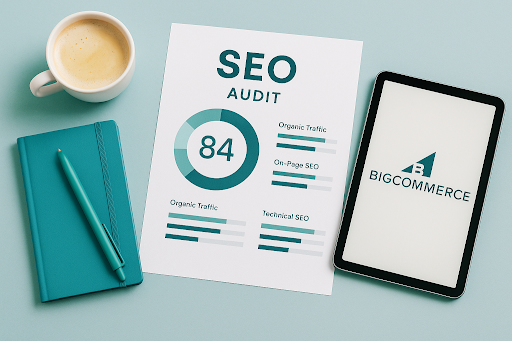
How to Conduct an SEO Audit for a BigCommerce Website? Easy Steps to Follow
To audit a BigCommerce site, check speed and mobile use, on-page SEO on product pages, indexing and crawlability, structured data, internal links, duplicate content and backlinks. Pay extra attention to faceted navigation and BigCommerce's built-in SEO settings.
 Paula
Project Manager, Market Me Good 5 min read
The expert take
4 points- Product pages carry the weight. Unique titles, descriptions and content on product and category pages matter most for a store.
- Watch faceted navigation. Filters can create thousands of near-duplicate URLs. Control what gets crawled and indexed.
- Use the platform settings. BigCommerce has built-in SEO controls for URLs, titles and redirects. Check they are set correctly.
- Audit regularly. Stores change constantly, so treat the audit as a recurring health check, not a one-time fix.
On this page
BigCommerce powers over 60,000 online stores worldwide, offering robust e-commerce functionality with scalable features. But no matter how polished your store looks or how well it converts, poor SEO can quietly cap your growth.
In fact, 68% of online experiences begin with a search engine, making organic visibility critical for long-term success.
Conducting an SEO audit for your BigCommerce site helps uncover technical issues, content gaps, and optimisation opportunities that directly impact rankings, traffic, and revenue.
Conduct an SEO Audit for Your BigCommerce Website SEO Effectively

Auditing a BigCommerce website requires a strategic approach, combining platform-specific nuances with universal SEO best practices. Here’s a real-world breakdown of how to conduct a high-impact SEO audit:
1. Check Site Speed and Mobile Friendliness
Performance and mobile usability directly influence rankings and user engagement.
- Use Google PageSpeed Insights to analyze loading times.
- Test mobile responsiveness with Google’s Mobile-Friendly Test.
- Optimize heavy image files using BigCommerce’s built-in Image Manager.
- Minimize unused apps and scripts that slow down the site.
Pro Tip:BigCommerce allows you to compress images automatically in the server settings. Activate this to avoid third-party compression apps that can sometimes distort quality.
2. Review On-Page SEO Across Your Product Pages
Many BigCommerce stores suffer from weak product page SEO, limiting discoverability.
- Optimize title tags and meta descriptions: Keep titles under 60 characters and meta descriptions under 160 characters.
- Use clean, readable URLs: Example: /collections/women-shoes instead of /product?id=12345.
- Add unique product descriptions instead of using supplier defaults.
- Use header tags (H1, H2) properly—especially on category and landing pages.
3. Analyze Indexing and Crawlability
If Google can’t properly crawl your BigCommerce site, rankings will suffer no matter how good the content is.
- Use Google Search Console to check for crawl errors and coverage issues.
- Review the site’s robots.txt and sitemap.xml files.
- Fix duplicate or broken pages using BigCommerce’s Redirect Manager.
4. Inspect Structured Data and Schema Markup
Rich results (stars, prices, stock info) drive better click-through rates.
- Install apps like Schema App Total Schema Markup or manually add structured data for products, reviews, and FAQs.
- Validate schema using Google’s Rich Results Test tool.
Pro Tip:Adding a schema for FAQs on your most important product or category pages can boost visibility in voice search and rich snippets, a secret many stores still miss.
5. Improve Internal Linking
Effective internal linking distributes authority and keeps users engaged.
- Link from blog posts to category pages and products naturally.
- Ensure no important page is more than three clicks away from the homepage.
- Regularly audit broken internal links using tools like Screaming Frog.
6. Audit for Duplicate Content Issues
Duplicate content is a hidden killer for BigCommerce SEO.
- Use Copyscape or Siteliner to find duplication across product pages.
- Customize product descriptions, titles, and meta fields.
- Add canonical tags where necessary to signal preferred URLs to search engines.
7. Evaluate Backlinks and External SEO Factors
Off-page SEO matters as much as on-site optimizations.
- Analyze backlink quality using Ahrefs, SEMrush, or Moz.
- Disavow toxic backlinks that could harm domain authority.
- Focus on building links from industry blogs, local directories, and niche influencers.
Technical Checks Unique to BigCommerce Stores
Beyond general SEO elements, BigCommerce sites present some unique technical challenges:
Optimize Faceted Navigation
Faceted search can cause duplicate content if URLs with filters (e.g., color, size) get indexed. Prevent this by:
- Blocking filter parameters in robots.txt.
- Using canonical tags pointing to the main category page.
Use BigCommerce’s Built-In SEO Settings Wisely
BigCommerce includes built-in SEO features—using them correctly helps improve visibility and search engine indexing from the start.
- Activate SEO-friendly URLs in settings.
- Enable 301 redirects when changing product URLs.
- Manage out-of-stock products properly—either by redirecting or updating status without deleting pages.
Leverage the Blog for SEO
Many BigCommerce store owners ignore their blogs. Regular blogging:
- Creates fresh content that improves SEO.
- Target long-tail keywords ythat our products can’t easily rank for.
- Attracts natural backlinks over time.
Pro Tip:Treat blog content like a mini sales funnel—internal link from blogs to top-selling collections naturally to boost conversions from organic traffic.
Common Pitfalls to Avoid During Your BigCommerce SEO Audit

- Neglecting site structure: A messy structure confuses users and Google.
- Forgetting noindex tags: Occasionally, store builders accidentally noindex important pages.
- Ignoring HTTPS errors: Every page must be secure; mixed content can damage trust and rankings.
Treat Your SEO Audit Like a Health Check, Not a One-Time Fix
An SEO audit isn’t just something to tick off after launching a BigCommerce store—it’s the ongoing maintenance that keeps your site competitive and profitable.
The Health Check Mindset
Just like annual physicals catch problems before they become emergencies, monthly SEO audits reveal silent killers that sabotage your rankings:
- Page speed issues that drive away 40% of visitors after 3 seconds
- Broken product links creating 404 errors, Google hates
- Bloated code from abandoned appsis slowing your site to a crawl
- Missed schema markup opportunities that give competitors rich snippets
- Duplicate content across product variations confuses search engines
Why “Set and Forget” SEO Dies
Your store operates in a constantly shifting landscape:
BigCommerce updates introduce new features (and sometimes break old optimizations). Google algorithm changes happen 3,000+ times per year. Customer search behavior evolves with trends, seasons, and market shifts.
Stores that audit consistently stay fast, clean, and tuned to capture organic traffic. Those that ignore maintenance slowly hemorrhage rankings without realizing competitors are eating their lunch.
The Competitive Reality
Your competitors aren’t standing still. While you’re assuming your SEO is “handled,” they’re:
- Optimizing for new keywords, you’re missing
- Fixing technical issues that give them speed advantages
- Creating fresh content that targets your customers
- Building links that boost their domain authority
Boost Your BigCommerce Store’s SEO the Right Way
Running a full SEO audit on a BigCommerce website is not just about finding errors—it’s about unlocking opportunities. When done right, it becomes a foundation for sustainable growth.
Focus on technical health, robust content, smart internal links, and backlink quality. Add a few expert-level tweaks like schema enhancements and mobile performance optimizations, and watch your store climb the rankings—and your revenue climb with it.
Want professional help scaling your BigCommerce SEO? Visit Market Me Good and get expert support tailored to e-commerce success.
Finished the read?
Now make us rank you.
Doing this since 2010. 500+ campaigns. We make SEO predictable, AI search citable, programmatic SEO buildable. Talk to Helvis directly.
Book a callKeep reading
All posts GuidesWhat Are the Best Keywords for Print On Demand Websites?The best keywords for print-on-demand sites are specific and tied to buyer intent: niche terms, product plus audience terms, occasion and seasonal terms, trending terms and evergreen terms. Generic words like "t-shirt" rarely bring sales.Read the post
- GuidesIs Local Business Schema the Key to Local SEO Success?Local business schema helps, but it is not the key on its own. It gives search engines clear facts about your name, address, phone, hours and services, which supports local visibility alongside a strong Google Business Profile.Read the post
- GuidesHow to Use Google Maps Citations for Local SEO: Full Step-by-Step TutorialUse Google Maps citations by listing your business name, address and phone number the same way everywhere: core directories first, then local and niche ones. Then check them regularly, because one wrong phone number or old address weakens the trust Google places in your listing.Read the post